Chinese Weddings
秀禾褂 and 龙凤褂 wedding dress
The embroidery, the colour, the way it feels on. Explore the dress you’re drawn to, then ask about photography and styling.
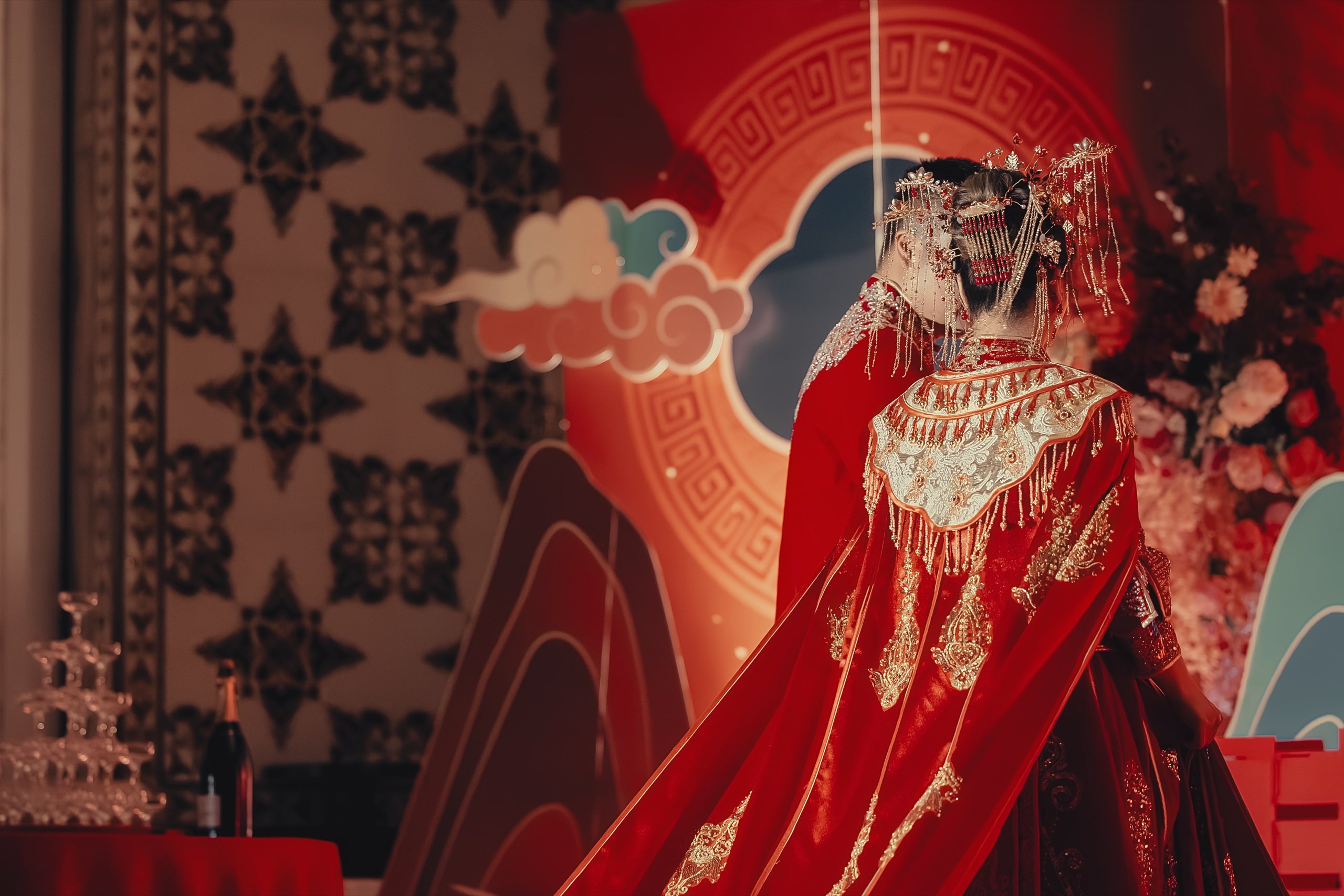
秀禾褂 vs 龙凤褂 — where they differ
Both are red bridal sets, but they are not the same garment. The simplest way to tell them apart is form, embroidery density, colour range and occasion.
| Form | Embroidery | Colour | Occasion | |
|---|---|---|---|---|
| 秀禾褂 | Two-piece — top and skirt | Looser, painterly motifs | Red base, wider colour range | Tea ceremony, banquet, portraits |
| 龙凤褂 | Jacket-and-skirt set | Fully embroidered — dense gold/silver thread | Red and gold, traditionally | The most formal moments |
How we bring out the texture of the embroidery
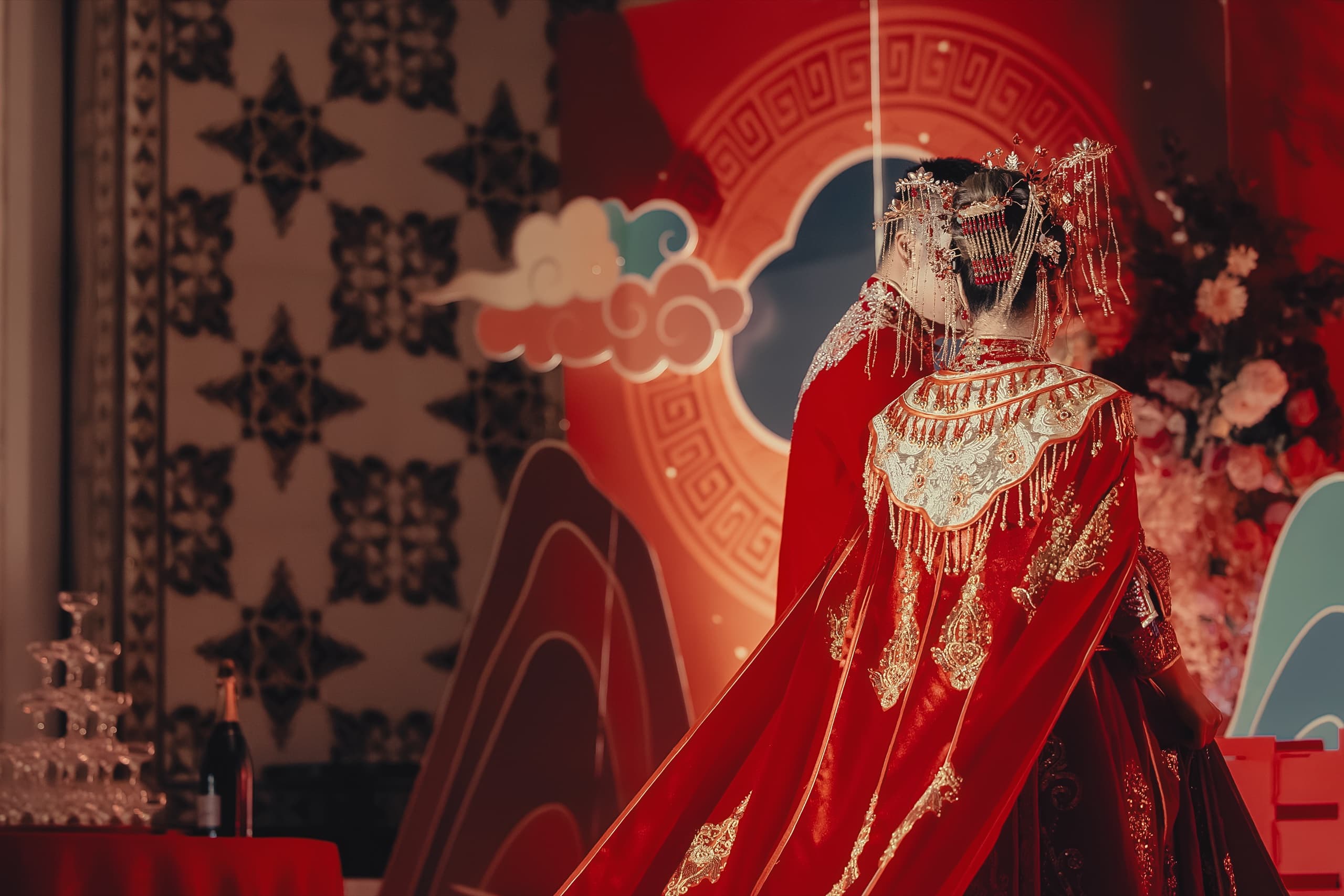
Dense gold and silver thread is reflective, and warm banquet light flattens it if you let it. We light and expose so the raised stitching keeps its dimension and the red stays true rather than orange — close-up and full-length both.
Blended days — when to wear which
Many couples wear a 秀禾褂 or 龙凤褂 for the tea ceremony and change into a white gown for the evening, or the reverse. There is no single right order; we help you place each garment where the light and the moment suit it best (see the red, white, or both page).
Common questions
A fully-worked 龙凤褂 is generally read as the more formal of the two, because of the density of the gold-and-silver embroidery. A 秀禾褂 is no less traditional — it simply offers a wider range of styles and colours.
Either works for either. Many brides wear the heavier garment for the most formal moment and a lighter one elsewhere. We plan around your day so the changes are calm, not rushed.
Red is the traditional base, especially for a 龙凤褂. A 秀禾褂 offers more colour range, and many couples add a white gown for part of the day (see the red, white, or both page).
Since 2011 · Mandarin & Cantonese